
The 2026 Sanibel-Captiva Nature Calendar Has Arrived!
05/02/2025 at 14:55 pmNew Edition of The Sanibel-Captiva Nature Calendar
The wait for the 2026 Sanibel-Captiva Nature Calendar is over! This year’s edition continues to feature the effects of the most recent hurricanes. Through photographs and specific narratives, you will get a sense of how the Islands’ wildlife continues to persevere when their habitat is disrupted. The birds that live on the islands were the least affected but the wildlife that relies on the inland freshwater environment, like plants and animals, were the most affected. The future rainy seasons will continue to dilute the saltwater contamination and improve the conditions in Sanibel’s sloughs. We are learning that the 2024 island wide beach sand replacement project negatively affected nesting shorebirds and sea turtle hatchlings by covering the natural beach sand habitat.
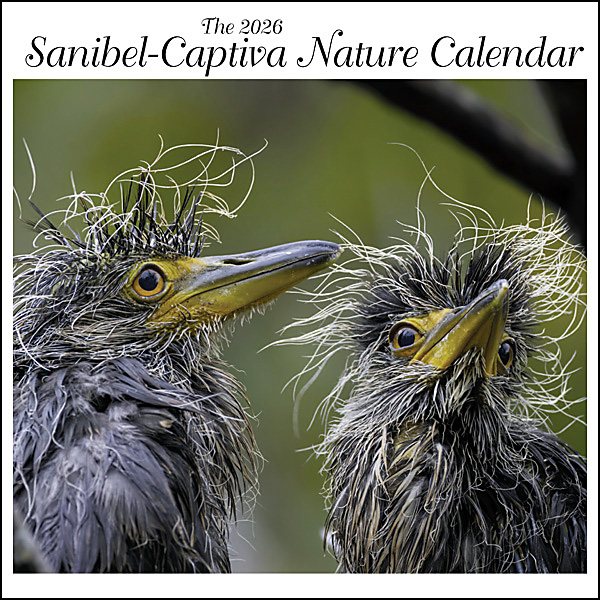
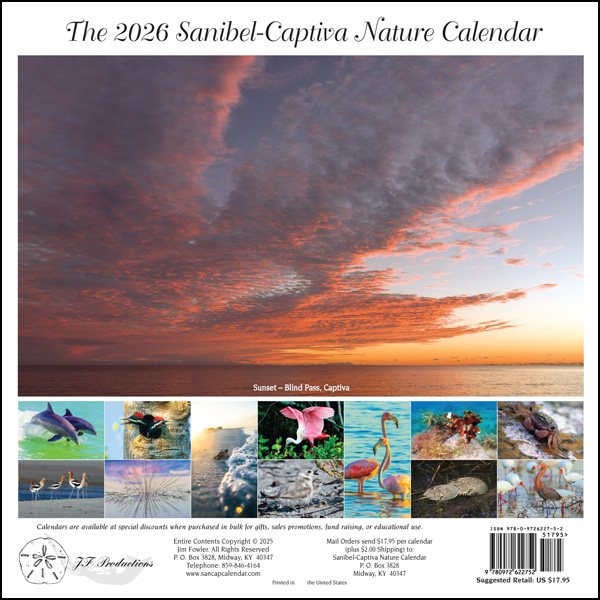
There are months of hard work put into making this calendar; the artists and writers involved always produce beautiful work for us to enjoy and stories that connect us to the nature we surround ourselves with every day. Sue Stephens is the artist whose detailed seashells appear on every page. Sue is known to have paintings and sketches appearing in local and national publications. The cover photo for this edition features two yellow-crowned night-heron chicks at the J.N. “Ding” Darling National Wildlife Refuge on Sanibel. It was photographed by Cliff Beittel. You can find the yellow-crowned night-herons on the islands all year. They are a common sight nesting over the water at the refuge. The back cover photo was taken by Don Thompson, it is of Sunset at Blind Pass, Cpativa. Each monthly photograph tells the story of the photographer's skill, connection to the subject, and the hours spent waiting in anticipation. As Southwest Florida locals and leading experts in their fields, the writers offer respected perspectives in each narrative.
Sneak Peak
February is a special month, it features an image of the American Flamingos at J.N. “Ding” Darling National Wildlife Refuge, photographed by Cliff Beittel. The writer, Charles LeBuff, explains that there has been a long debate amongst ornithologists if the American flamingo is native to Florida or if they migrate into Florida occasionally. It was claimed that they were extirpated from the state in 1900. The bird pamphlet at “Ding” Darling Refuge suggests an American flamingo sighting is rare or accidental. It is suspected that many flamingos were trapped in Hurricane Idalia’s winds or blown off course and were swept into many areas of Florida. There were three flamingos photographed last year on Sanibel, two at the “Ding” Darling Refuge and one in the surf at the Buttonwood Beach access. The two flamingos pictured in the calendar are fully grown and stand about 57 inches tall with a wingspan of 65 inches. They are nearly mature males but still show signs of juvenile color. It is important to remember that the flamingo species is protected federally by The Migratory Bird Treaty Act and Florida laws.
The month of June pictures Snowy Plover with Chick, photographed by Theresa Baldwin. It features an incredible close-up picture of a snowy plover with a chick at Gulfside City Park Beach, Sanibel. Audrey Albrecht contributed an eye-opening narrative about the Snowy Plover. They are a year-round resident of Sanibel, and they are the smallest of the six plover species that can be found on the island. Males dig a shallow depression in the sand and the females lay one egg every other day until they reach three, then the eggs are incubated for four weeks. There have been many changes to the snowy plover’s nesting grounds on Sanibel in recent years after multiple hurricanes. Hurricane Ian created favorable changes to the beach for the plover nesting success. They were able to camouflage with the natural beach’s shells, vegetations, and wrack lines. The most recent beach renourishment projects cover the beach with imported sand that lacks the shells and vegetations the plovers need. It will take time, but the beach will return to a more natural state, and it will be favorable for nesting again.
October features the Loggerhead Sea Turtle Hatchling photo, taken by Shane Antalick, at the beach on West Gulf Drive. Writer, Charles LeBuff, enhances our understanding of the loggerhead sea turtle in his narrative. He explains that sea turtles don’t live an easy life from the start. After hatching they must crawl through layers of sand and wait to break free until darkness. They often go in large groups as quickly as they can towards the water. However, some embryos develop slower, and they don’t make it out with the main group. They need outside help to survive. On Sanibel and Captiva each nest is dug up a few days after hatching to be monitored. The little turtle pictured was lucky to be rescued from egg cavity when conservationists inspected it. If this turtle’s luck holds up and it’s a female, it may return to our barrier islands to nest in 35 years! The population of loggerhead sea turtles nesting on Sanibel and Captiva is growing with the help of conservation efforts. Loggerhead sea turtles are classified as threatened under the Endangered Species Act and The State of Florida protects all sea turtle species.
What to Expect
This edition of the Sanibel-Captiva Nature Calendar features exceptional photos of wildlife on the Islands rejoicing in their environment. This calendar showcases the natural beauty of Sanibel and Captiva while also explaining how natural disasters and recovery efforts are affecting the wildlife we have come to love. Inside the calendar includes a list of all 2026 Atlantic Hurricane Names, special days for 2026 and 2027, and more information about the Conservation Organizations of Sanibel, Captiva, and Southwest Florida. Take a piece of Sanibel Island home with you when you come to Southwest Florida in 2026!